Walking through the winding cobblestone streets of Old Tbilisi, your senses are immediately besieged by an intoxicating blend of aromas: the yeasty comfort of freshly baked bread from a tone oven, the sharp tang of local cheeses, and the smoky allure of charcoal-grilled meats. Tbilisi is not just a capital city; it is the beating heart of a culinary tradition that has survived and evolved for centuries, acting as a delicious bridge between Europe and Asia. As we step into 2026, the city’s food scene has matured beautifully, offering a perfect juxtaposition where centuries-old recipes coexist with avant-garde gastronomic experiments. Whether you are a seasoned gourmand or a curious traveler, the Georgian capital promises a feast that goes far beyond simple sustenance; it is an immersion into a culture that values hospitality above all else.
The Soul of the Supra: Understanding Georgian Hospitality
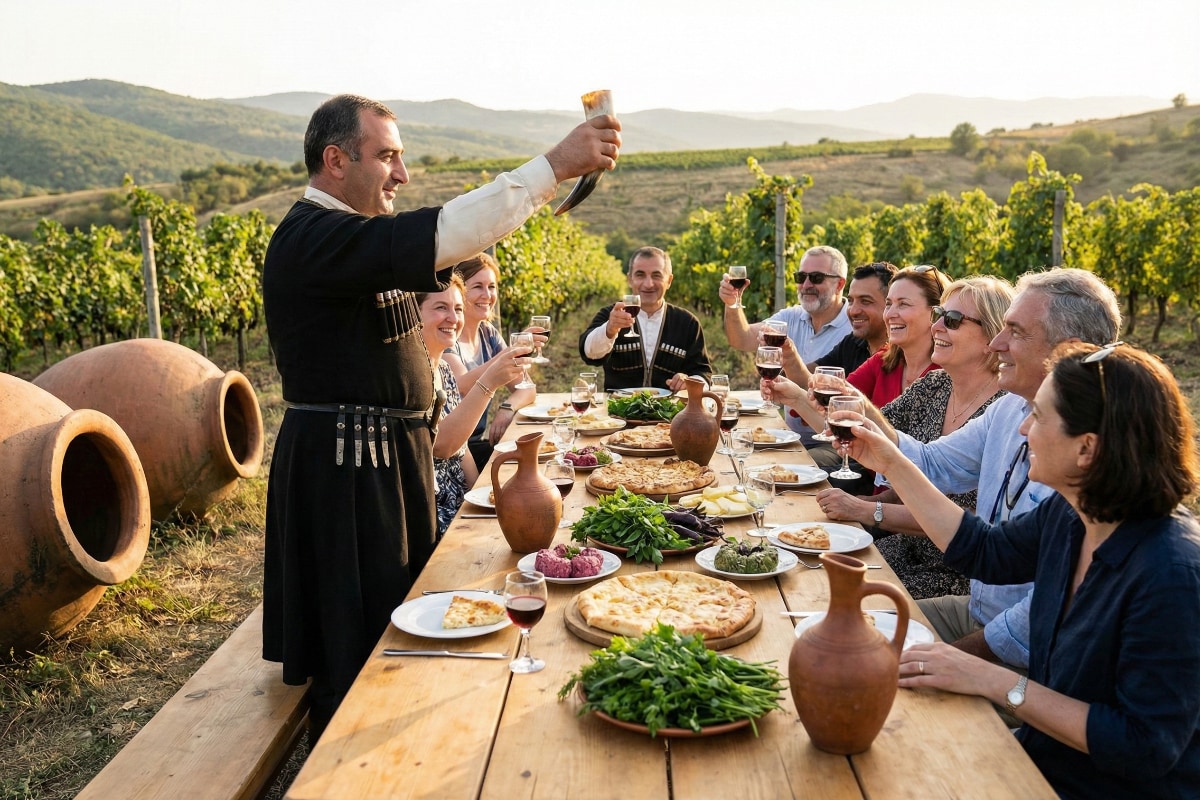
To truly understand the food in Tbilisi, you must first grasp the concept of the supra, the traditional Georgian feast that is central to social life. It is not merely a dinner but a orchestrated event led by a tamada (toastmaster), where wine flows freely and the table is constantly replenished with plates stacked upon plates. This philosophy of abundance translates to restaurant dining as well; you will rarely see a Georgian table with empty space, as hospitality is measured by the sheer volume and variety of food offered to guests. In local culture, a guest is considered a gift from God, and feeding them is a sacred duty that every chef, home cook, and restaurant owner takes incredibly seriously. When you dine in Tbilisi, you are participating in this ancient ritual of connection, storytelling, and communal joy.
Essential Georgian Dishes You Cannot Miss
The culinary landscape of Georgia is vast, defined by the distinct micro-climates and traditions of its various regions, all of which converge in the kitchens of Tbilisi. While the menu options can be overwhelming, there are specific cornerstones of the cuisine that act as a rite of passage for any visitor. These dishes rely heavily on fresh produce, walnuts, pomegranate, aromatic herbs like tarragon and cilantro, and, of course, locally produced cheese.
Khinkali: The King of Dumplings
Perhaps the most iconic symbol of Georgian comfort food is the Khinkali, a twisted knob of dough filled with spiced meat and a reservoir of savory broth. While the classic version hails from the mountain regions and contains a mix of beef and pork, you will find versions filled with mushrooms, cheese, or potatoes for vegetarians. Eating Khinkali is a skill that requires practice; you must grab the dumpling by its top knot (the kuchi), take a small bite to suck out the hot juice without spilling a drop, and then devour the rest. It is a messy, interactive, and incredibly satisfying experience that usually takes place in bustling taverns where orders are tallied by the dozens.
Khachapuri: A Regional Cheese Bread Tour
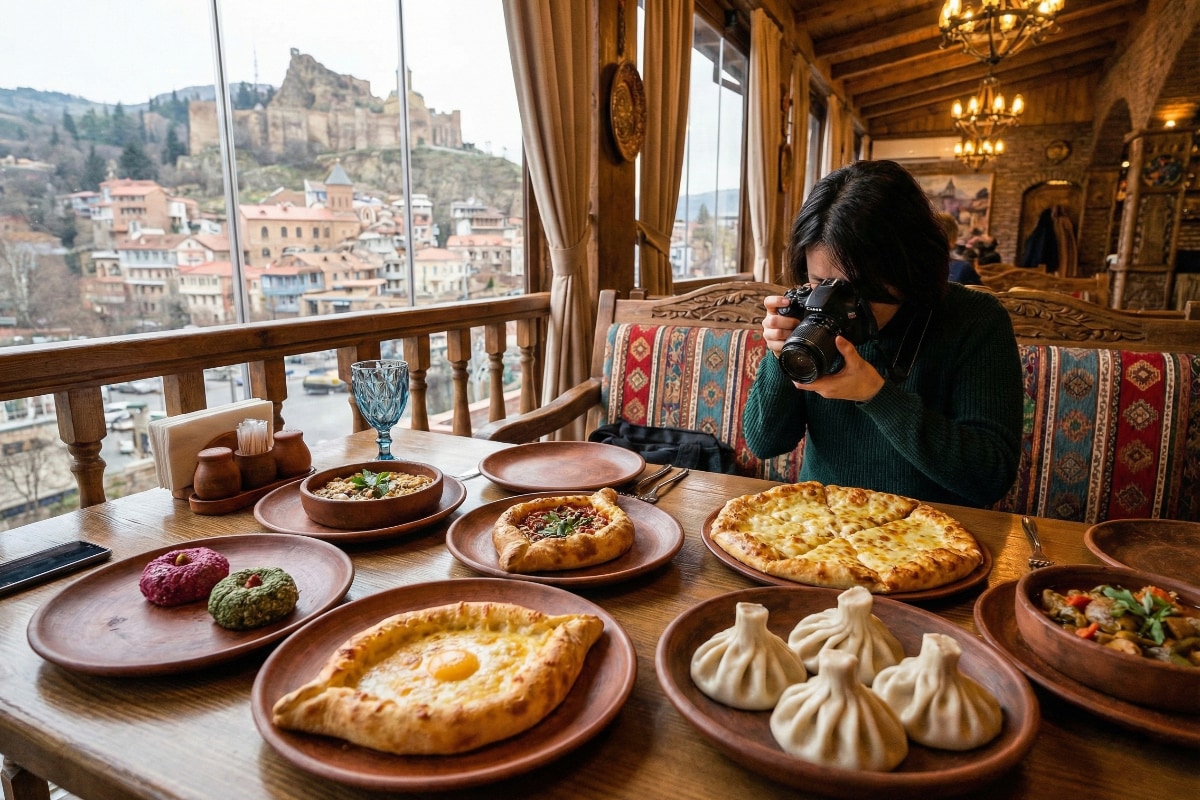
Khachapuri is often simplified as "cheese bread," but this description fails to capture the complexity and regional pride attached to each variation. In Tbilisi, you will encounter the circular Imeruli khachapuri, which is stuffed with cheese and soft like a quesadilla, and the Megruli version, which adds an extra layer of grilled cheese on top. However, the undisputed star for many is the Adjaruli khachapuri, a boat-shaped vessel of dough filled with molten cheese and butter, topped with a raw egg yolk that cooks slightly as you stir it into the hot mixture. tearing off the crusty edges to dip into the gooey center is a breakfast, lunch, or dinner ritual that defines the Georgian dining experience.
Walnuts and Vegetables: Pkhali and Badrijani
Georgian cuisine is surprisingly friendly to vegetarians and vegans, largely thanks to the heavy use of walnut paste (nigvzi) as a primary flavoring agent. You simply cannot leave the city without trying a platter of Pkhali, which are vegetable pâtés made from spinach, beetroot, or leeks mixed with ground walnuts, vinegar, and garlic, often garnished with pomegranate seeds. Another absolute must-try is Badrijani Nigvzit, which consists of fried eggplant strips rolled around a rich, garlicky walnut filling. These cold appetizers usually start the meal and provide a refreshing, textural counterpoint to the hot breads and heavy meats that follow.
Hearty Stews and Clay Pot Wonders
For those seeking comfort on a chilly evening, the clay pot dishes of Georgia offer warmth and depth of flavor that is unmatched. Lobio is a spiced bean stew served in a small clay jar, often accompanied by cornbread (mchadi) and pickles to cut through the richness. On the meatier side, Chakapuli is a spring favorite that has become a year-round staple, featuring lamb or veal stewed with white wine, sour plums (tkemali), and mounds of fresh tarragon. Another garlic-lover’s dream is Shkmeruli, a dish of roasted chicken submerged in a bubbling, creamy garlic and milk sauce that demands plenty of bread for dipping.
Where to Eat: From Basements to Rooftops
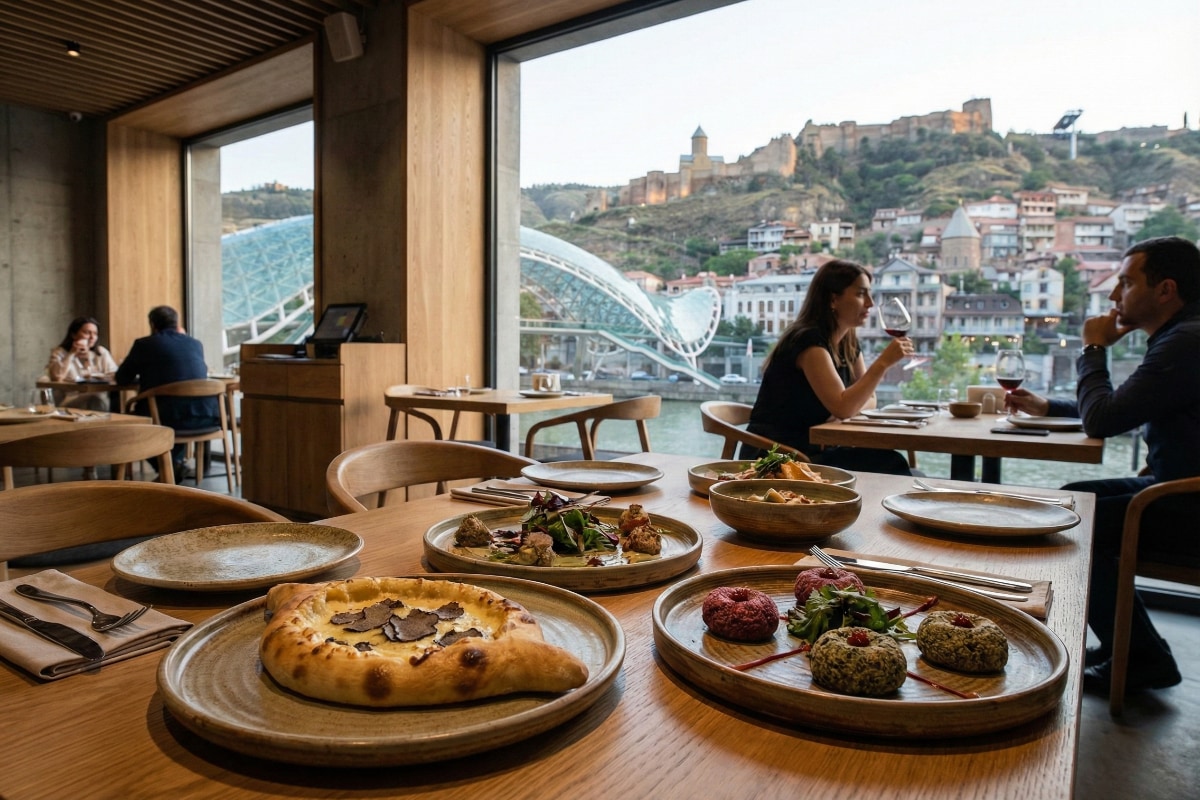
Tbilisi’s dining scene is a tale of two cities: the traditional and the modern, both of which offer exceptional quality depending on what you are craving. You can spend your afternoon in a Soviet-style tavern and your evening in a sleek, glass-enclosed restaurant overlooking the Mtkvari River. The diversity of venues ensures that every meal feels like a new adventure, exploring different facets of the city's personality.
Authentic Taverns and Sakhachapure
To taste the true essence of Tbilisi, you must venture into the "Sakhachapure" (khachapuri places) and basement taverns often referred to as dukhanis. These spots are rarely fancy; they feature heavy wooden tables, dim lighting, and a noise level that rises with every toast of Chacha (grape vodka). Here, the focus is entirely on the food's authenticity and portion size, serving dishes exactly as grandmothers have made them for generations. These are the best places to try Khinkali, as the turnover is high, ensuring fresh, steaming batches are constantly leaving the kitchen. Some popular and highly-rated dukhanis include Machakhela, famous for its enormous Khinkali, and Zakhar Zakharich, a local favorite known for its traditional Georgian fare and lively atmosphere.
Modern Georgian and Fusion Dining
In recent years, a new wave of chefs has returned to Georgia, bringing European techniques to traditional ingredients, creating a vibrant "New Georgian" cuisine. Located primarily in the districts of Vera, Vake, and Sololaki, these restaurants deconstruct classic recipes, offering lighter, more refined versions of heavy staples. You might find Khinkali with shrimp and truffle, or desserts that reimagine traditional churchkhela into fine-dining pastries. These venues also boast extensive wine lists featuring natural amber wines from qvevri vessels, curated by knowledgeable sommeliers. For a modern twist on Georgian classics, try Barbarestan, known for its innovative dishes and elegant ambiance, or Keto and Kote, which offers a sophisticated dining experience with stunning city views.
Quick Guide: Choosing Your Dining Experience
With so many options, it can be difficult to decide where to book a table. The following breakdown helps categorize the types of dining experiences available in Tbilisi to suit your mood and occasion.
| Venue Type | Atmosphere | Best Dishes to Order | Ideal For |
| Traditional Dukhani | Lively, rustic, noisy, basement setting | Khinkali, BBQ Pork (Mtsvadi), House Wine | Large groups, budget travelers, authentic vibes |
| Sakhachapure | Casual bakery-style, fast service | Adjaruli Khachapuri, Lobiani (bean bread) | Quick lunch, hangover cure, comfort food |
| Garden Restaurants | Relaxed, outdoor seating, green courtyards | Chakapuli, Fresh Salads, Grilled Trout | Romantic dinners, summer evenings, families |
| Modern Fusion | Chic, minimalist, artistic presentation | Deconstructed classics, Duck dishes, Desserts | Foodies, date nights, wine tasting |
The Street Food Culture
While sit-down meals are the norm, Tbilisi has a growing street food culture that goes beyond the ubiquitous bakeries selling warm bread through window hatches. Walking through the Dry Bridge Market or the streets near Fabrika, you will encounter vendors selling Churchkhela, often called "Georgian Snickers," which are strings of nuts dipped in thickened grape juice. Freshly squeezed pomegranate juice is another street-side staple, offering a tart vitamin boost as you explore the city. Don't miss out on the small windows selling Ponchiki, hot custard-filled doughnuts that are a nostalgic treat for locals and a sugary delight for visitors.
For a truly immersive experience, consider visiting Tbilisi during the annual Tbilisi Street Food Festival. This event showcases the city's diverse culinary scene, featuring food stalls from local restaurants and vendors, live music, and cooking demonstrations. It's a fantastic opportunity to sample a wide variety of Georgian dishes in one place and experience the vibrant atmosphere of Tbilisi's food culture.
Practical Tips for the Culinary Traveler
Dining in Tbilisi comes with its own set of unspoken rules and quirks that can enhance your experience if you are prepared. First, be aware that service in traditional taverns can be laid-back; meals are meant to be enjoyed slowly, so do not expect a rush. Tipping is generally appreciated, with 10% to 15% often added to the bill automatically as a service charge, though adding a little extra cash for excellent service is a kind gesture. Finally, always check if the restaurant accepts cards, as some smaller, family-run spots deep in the old town may still prefer cash. Embracing these small details will help you navigate the city's gastronomic landscape like a local, turning every meal into a cherished memory.