To step into Georgia is to accept an invitation to a table that has been set for centuries. There is a saying in this high-altitude nation that resonates through every valley and city street: "A guest is a gift from God." This is not merely a polite proverb; it is the fundamental law of Georgian hospitality. When you travel through the Caucasus, you quickly realize that food and drink are not just for sustenance—they are the medium through which friendship, history, and spirituality are exchanged. At the center of this cultural universe lies the Georgian Supra, a traditional feast that serves as the social backbone of the nation. It is an experience that transcends a simple dinner party, evolving into a poetic ritual that can last for hours, or even days.
As we navigate the travel landscape of January 2026, the allure of authentic, slow-travel experiences has never been stronger. The Supra offers exactly this: a pause in time where smartphones are put away, and human connection takes center stage. Whether you are in a high-end restaurant in Tbilisi or a humble village home in Kakheti, the structure of the feast remains the same. It is a performance of respect, a celebration of life, and a testament to a culture that has survived millennia of invasions while keeping its soul—and its wine—intact.
The Essence of the Supra: More Than Just a Meal
The word Supra literally translates to "tablecloth," but its metaphorical weight is far heavier. In Georgian culture, the Supra is often referred to as an "academy." It is a place of learning where the younger generation observes the elders to learn the art of public speaking, the history of their ancestors, and the intricate values of their society. The Supra's origins can be traced back to ancient pagan rituals, evolving over centuries to incorporate elements of Christianity and Georgian folklore. It has served as a vital social institution, preserving cultural identity through periods of war, occupation, and cultural exchange. There is no such thing as a casual snack at a Supra; it is a structured event, whether it is a Keipi (a festive celebration) or a Kelekhi (a somber funeral feast).
The atmosphere of a Supra is distinct. The table is traditionally laden with so many dishes that plates are often stacked on top of one another, symbolizing abundance. The idea is that the table should never look empty, reflecting the host's infinite generosity. However, the food, delicious as it is, serves as the accompaniment to the wine and the words spoken over it. The emotional arc of the evening is guided entirely by one figure: the Tamada.
The Tamada: The Conductor of the Feast
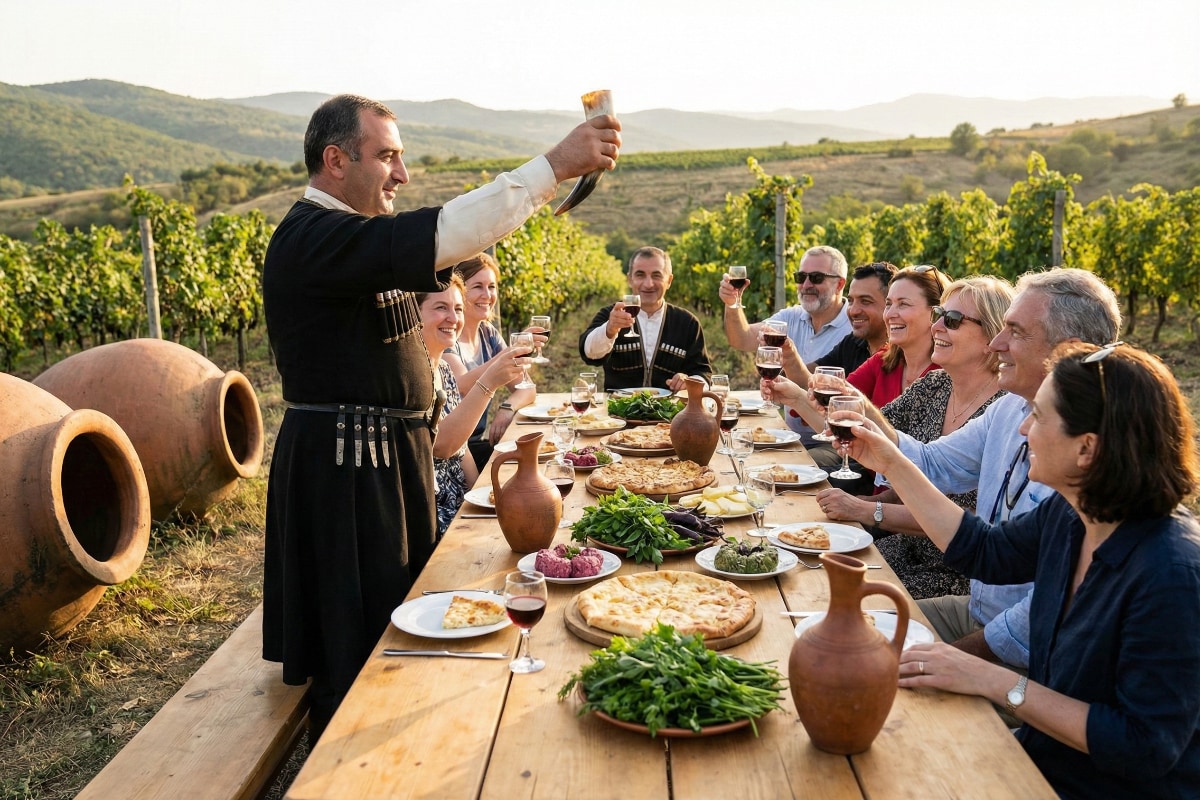
If the Supra is a symphony, the Tamada is its conductor. A Tamada is the toastmaster, usually chosen by the host or the guests at the beginning of the meal. This role is not taken lightly. A good Tamada must be eloquent, intelligent, humorous, and possess a high tolerance for alcohol, as they must lead every toast without losing their composure. They are the dictator of the table, but a benevolent one. No one is allowed to drink wine until the Tamada has proposed a toast, and no one may speak over them.
The Structure of Toasting
Toasting at a Georgian feast is not a quick "cheers" or "bottoms up." It is a form of poetry and prayer. The Tamada introduces a theme, speaks on it with passion and philosophy, and then drains their glass (or horn). The guests are then expected to elaborate on that theme before drinking. The progression of toasts usually follows a traditional hierarchy:
- To God and Peace: Almost every Supra begins with a toast to the Creator and a wish for peace, a poignant sentiment in a region that has seen much conflict.
- The Reason for the Gathering: Whether it is a birthday, a guest's arrival, or simply a Tuesday, the specific occasion is honored.
- Ancestors and the Deceased: A solemn moment where wine is often poured onto bread or the ground as a libation to those who came before.
- Parents and Children: Toasts celebrating the roots of the family and the future generation.
- The "Mandilosani": A special toast dedicated to the women present, highlighting their vital role in society and culture.
Liquid History: The Qvevri Winemaking Method
The fuel of the Supra is, without question, the wine. Georgia is widely considered the "Cradle of Wine," with archaeological evidence of winemaking dating back 8,000 years. What makes Georgian wine unique, however, is not just its age, but its method. In 2013, UNESCO recognized the traditional Qvevri winemaking method as an Intangible Cultural Heritage of Humanity.
Unlike European methods that use oak barrels or steel tanks, traditional Georgian wine is fermented and aged in Qvevri—large, lemon-shaped clay vessels lined with beeswax and buried underground. This method utilizes the earth's natural temperature control to ferment the grapes. Perhaps the most distinct result of this process is the "Amber Wine" (often called Orange Wine in the West). In this method, white grapes are fermented with their skins, seeds, and stems (the "mother") for several months. This skin contact gives the wine a deep amber hue, a robust tannic structure, and complex flavors of dried apricot, nuts, and honey.
Comparing Traditions: Qvevri vs. European Methods
To understand why Georgian wine tastes so distinct, it helps to look at the differences in production:
| Feature | Traditional Qvevri Method | Standard European Method |
| Vessel | Clay jars (Qvevri) buried underground | Stainless steel tanks or Oak barrels |
| Fermentation (White/Amber) | Skin contact for months (leaves, seeds, stems) | Juice separated from skins immediately |
| Filtration | Natural filtration via gravity | Often mechanical filtration and fining |
| Color | Deep Amber / Orange | Pale Straw / Gold |
| Tannins | High tannins (even in whites) | Low to no tannins in whites |
A Feast for the Senses: Culinary Companions
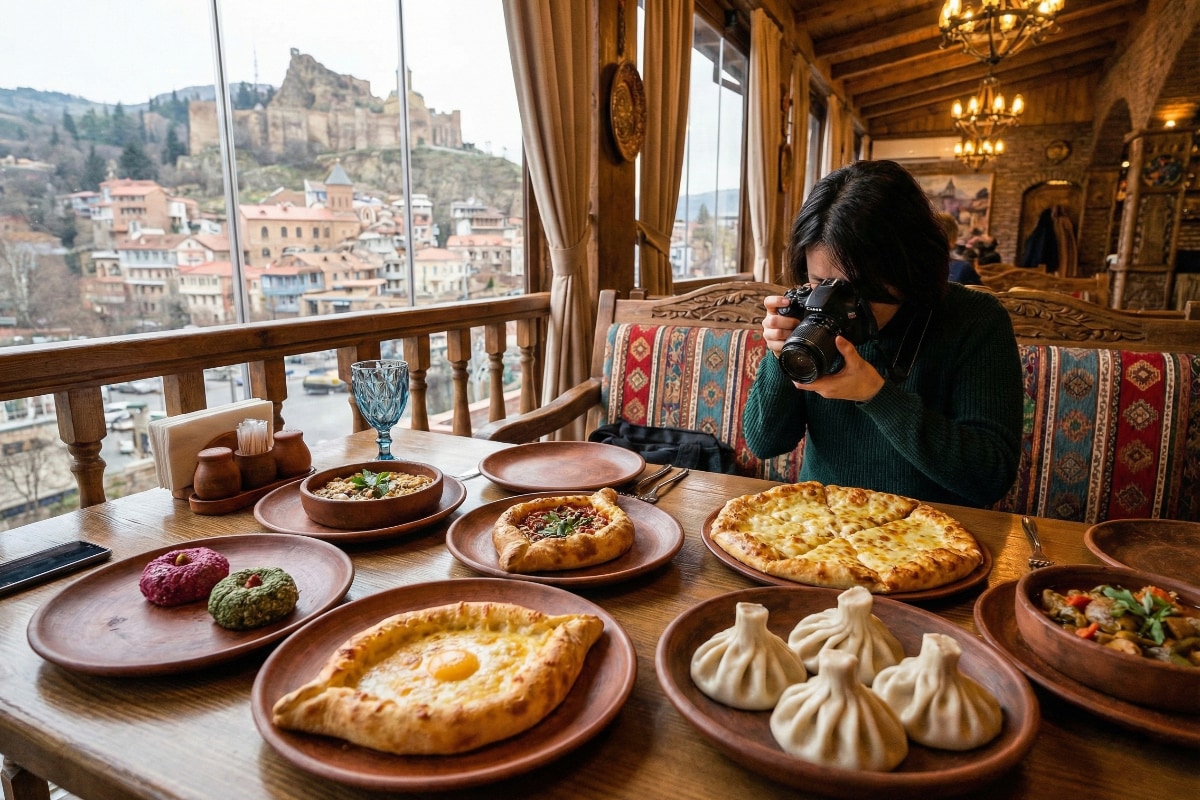
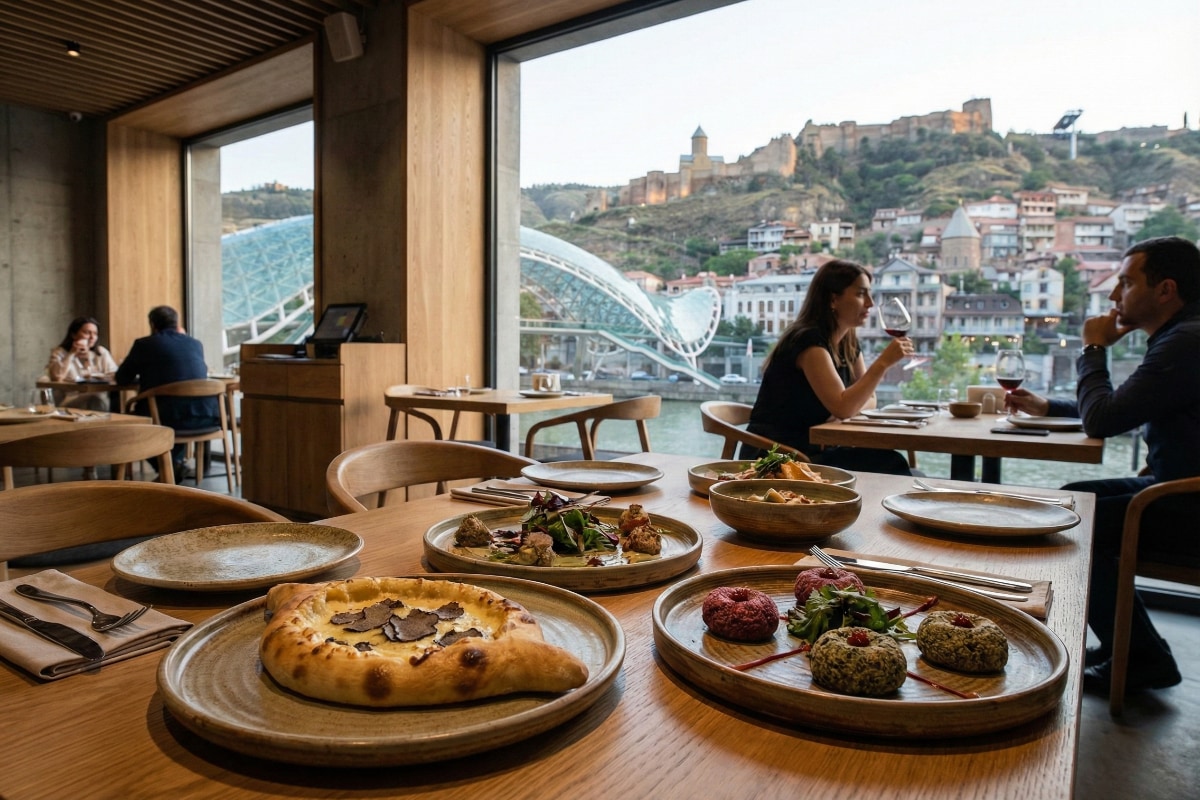
While the wine opens the heart, the food sustains the body. A Supra features a dizzying array of dishes that are passed around communally. You will inevitably encounter Khachapuri, the legendary cheese-filled bread that varies by region—from the boat-shaped Adjaruli to the circular Imeruli. Alongside it sits Khinkali, twisted dumplings filled with spiced meat and broth, which require a specific technique to eat without spilling the juice.
Vegetable dishes, known as Pkhali, are also essential. These are minced vegetables (spinach, beets, or beans) mixed with a rich walnut paste, garlic, and pomegranate seeds. The use of walnuts in Georgian cuisine is ubiquitous, adding a creamy texture and earthy flavor that pairs perfectly with the tannic grip of Qvevri wines.
Etiquette and Expectations: How to Be a Good Guest
Participating in a Supra can be intimidating for a newcomer, but the rules are based on respect. If you find yourself lucky enough to be invited to a Georgian table, keep these guidelines in mind to honor your hosts:
- Wait for the Tamada: Never drink your wine until the Tamada has finished their toast. It is considered rude to sip casually while speeches are being made.
- "Alaverdi": If the Tamada passes the toast to you (a tradition called Alaverdi), you are expected to say a few words on the current theme before drinking. You don't need to be a poet, but speak from the heart.
- "Bolomde": This word means "until the end" or "bottoms up." While you don't have to down every glass, specific toasts (like those to the ancestors) often require draining the glass as a sign of respect.
- Eye Contact: When clinking glasses, maintain eye contact. It is a sign of sincerity and trust.
- The Toast to the Host: Towards the end of the feast, it is customary to thank the host family. This is often one of the most emotional moments of the night.
The Georgian Supra is far more than a culinary event; it is a mechanism for bonding. It turns strangers into friends and friends into family. In a world that often feels disconnected, the ancient traditions of the Caucasus remind us that the simple act of sharing bread, wine, and words is the most powerful technology we have for human connection. So, if you raise a glass of amber wine in Georgia, remember: you are not just drinking; you are participating in 8,000 years of history.
[İÇERİĞE BURADA GÖRSELLER EKLENEBİLİR: Örneğin, Supra sofrasının, Tamada'nın, Qvevri'nin fotoğrafları metinle uyumlu şekilde yerleştirilebilir.]