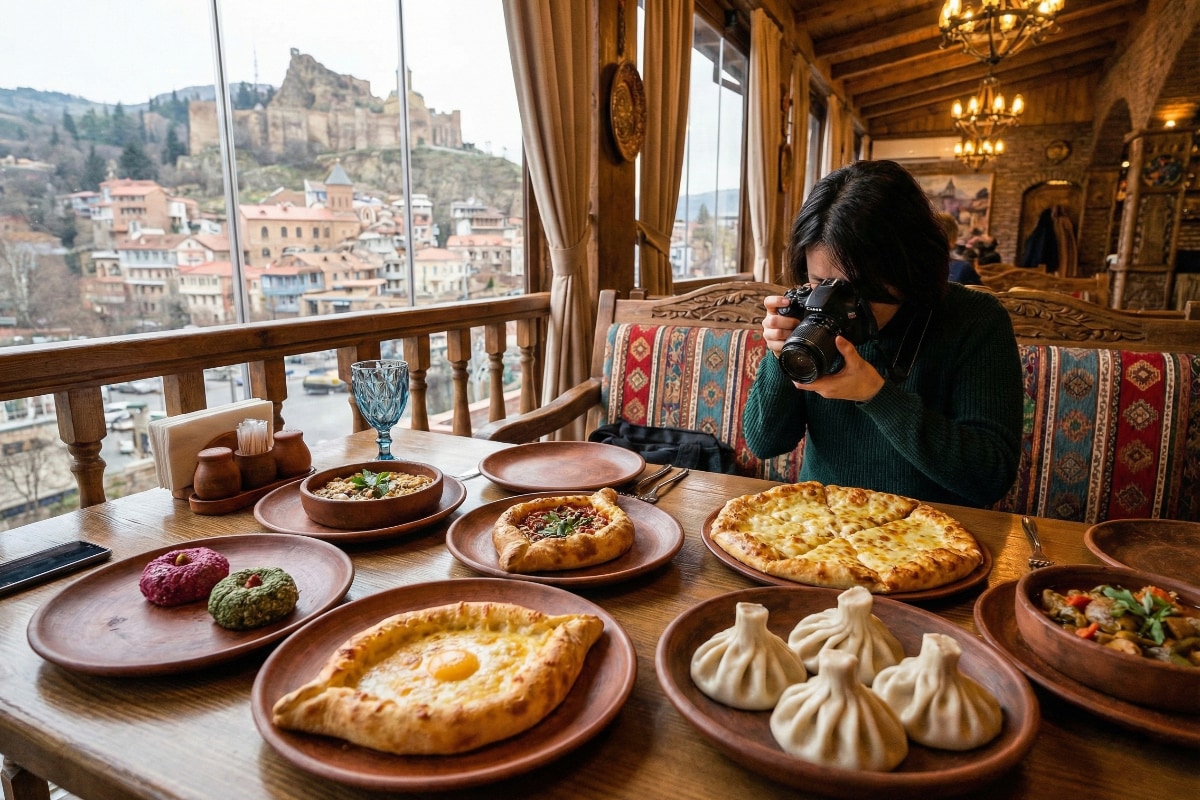
Tbilisi has long been celebrated as a city where the ancient and the modern coexist, but nowhere is this dynamic more palpable than on a dinner plate in January 2026. While the intoxicating aroma of freshly baked bread and the savory allure of charcoal-grilled meats still waft through the cobbled streets of the Old Town, a quiet revolution has taken hold of the city’s kitchens. The Georgian capital is no longer just a destination for rustic, hearty feasts; it has blossomed into a sophisticated hub of gastronomic innovation. For the adventurous diner, this means the opportunity to look beyond the classic tavern experience and dive into a world where heritage recipes are being respectfully deconstructed and brilliantly reimagined.
The culinary landscape of Georgia is currently experiencing a renaissance driven by a new generation of chefs who have trained globally but remain deeply rooted in their local soil. These culinary artists are not discarding the past; rather, they are interrogating it, asking how centuries-old flavors can be translated for the contemporary palate. The result is a dining scene that feels familiar yet excitingly unpredictable, utilizing modern French techniques, molecular gastronomy, and a farm-to-table philosophy that digs deeper into Georgia's biodiversity than ever before. Many chefs are now partnering directly with local farmers and producers like Nana's Greens in the Kakheti region for unique herbs and vegetables, and the Tsereteli Family Dairy for artisanal cheeses. This is not just food; it is a narrative of survival, adaptation, and artistic expression served on ceramic plates.
The Evolution of the Georgian Supra
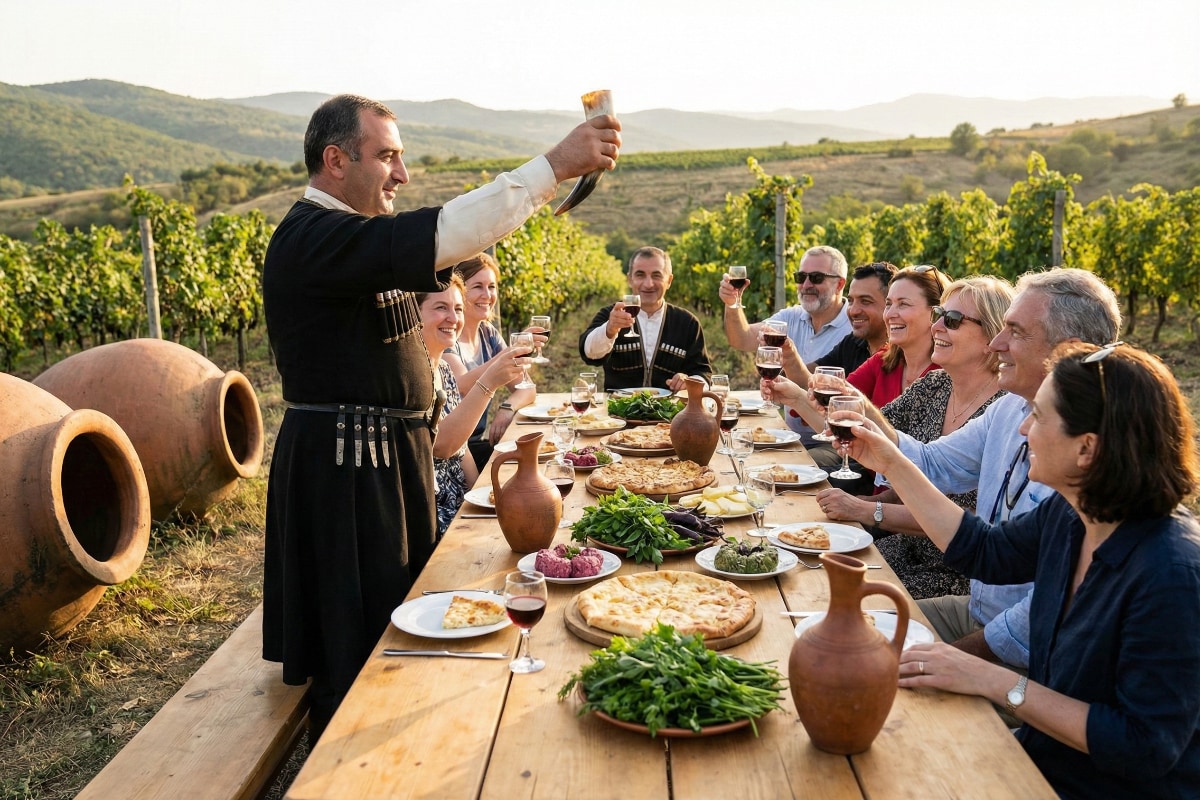
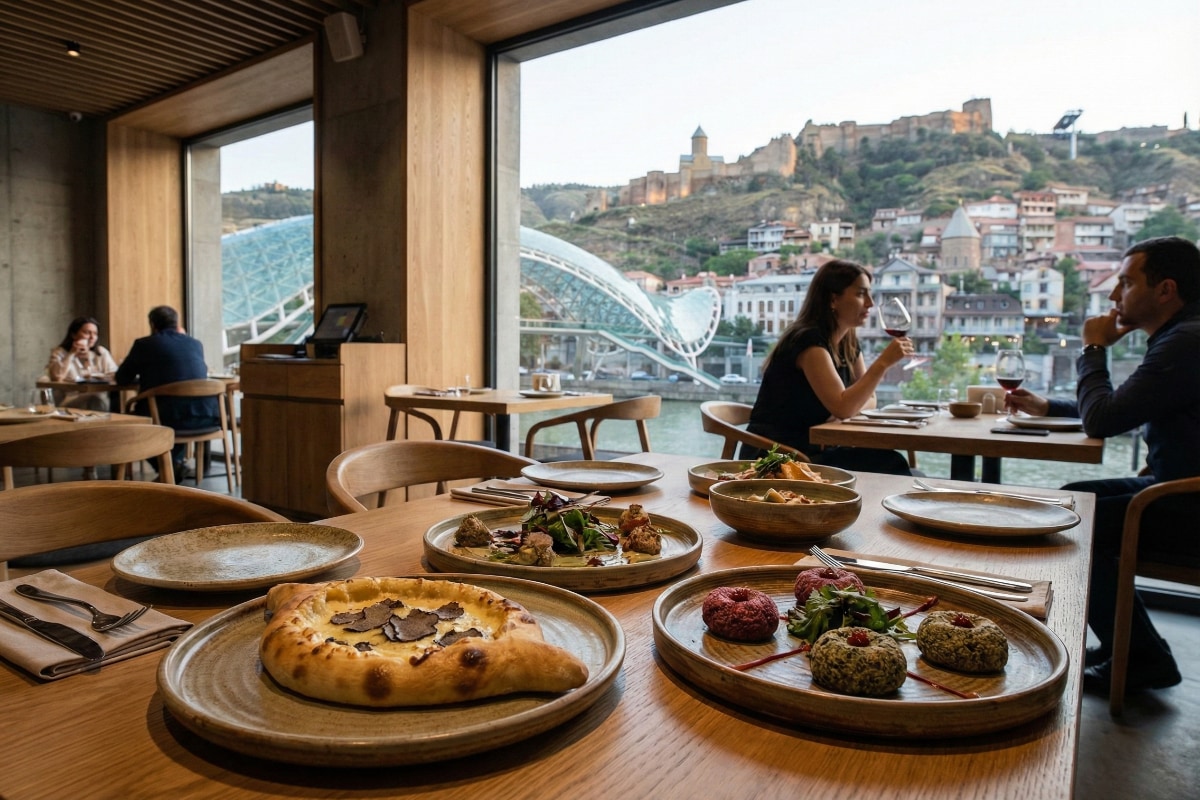
The traditional 'Supra'—the Georgian feast—is legendary for its abundance, often characterized by tables groaning under the weight of stacked plates. However, the modern interpretation of this ritual focuses on curation and precision rather than sheer volume. In the city's top-rated contemporary restaurants, the chaotic charm of the Supra is being tamed into tasting menus that tell a cohesive story. Diners are now presented with courses that flow logically, allowing the nuances of spices like blue fenugreek and marigold to shine without being overwhelmed by heavy fats or excessive portions.
This shift has allowed for a greater appreciation of texture and presentation, aspects that were sometimes secondary in rustic cookery. You might find walnut sauces that have been aerated into delicate foams, or cornmeal 'ghomi' that has been transformed into crispy, intricate textures rather than the traditional porridge consistency. The communal spirit remains, but the delivery has become more refined, catering to travelers who seek to understand the ingredients rather than just be filled by them.
- Plating Aesthetics: Minimalist presentation highlighting the vibrancy of fresh herbs and edible flowers.
- Portion Control: Smaller, flavor-dense servings that allow diners to sample a wider variety of dishes without fatigue.
- Ingredient Sourcing: A strict adherence to hyper-local sourcing, often listing specific regions or farmers on the menu.
- Service Style: knowledgeable sommeliers and servers who explain the history and modification of each dish.
Redefining the Classics: Khinkali and Khachapuri 2.0
Perhaps the boldest moves are being made with the holy grails of Georgian cuisine: Khinkali and Khachapuri. Altering these national treasures was once considered sacrilege, but today, it is the hallmark of culinary creativity. Chefs are experimenting with dough hydration, fermentation times, and alternative flours to create lighter, more digestible vessels for their fillings. The iconic boat-shaped Adjaruli Khachapuri, for instance, is seeing iterations where the heavy dough is replaced by puff pastry or where the cheese blend incorporates aged artisan varieties instead of the standard Sulguni.
The Khinkali Revolution
The dumpling has become a canvas for fusion. While the traditional beef and pork mixture is timeless, modern menus in Tbilisi feature fillings that reflect a cosmopolitan influence. Imagine biting into a translucent dough filled with duck confit and wild berry reduction, or a seafood version utilizing Black Sea mussels and saffron. These are not gimmicks; they are thoughtful pairings that respect the structural integrity of the Khinkali—the juice must still be trapped inside—while introducing completely new flavor profiles.
Deconstructed Flavors
Innovation also comes in the form of deconstruction. Ingredients typically stewed together for hours, like in a Chakapuli (lamb with tarragon and sour plums), are being prepared separately to preserve their individual integrity before being assembled on the plate. This technique ensures that the lamb remains pink and tender, the herbs vibrant green, and the sour plum sauce adds a bright, acidic punch rather than muddling the colors. It is a sensory experience that highlights the quality of the raw produce available in the Georgian countryside.
Consider adding a photograph here showcasing the deconstructed Chakapuli to visually represent this culinary innovation.
A Comparative Look: Old vs. New
To truly appreciate the depth of this culinary shift, it helps to look at how specific staples are being transformed. The following table illustrates the journey from the tavern table to the fine dining pass.
| Classic Dish | Traditional Preparation | Modern Interpretation |
| Shkmeruli | Fried chicken boiled in a heavy garlic and milk sauce. | Sous-vide chicken breast with a garlic-almond foam and crispy skin. |
| Pkhali | Minced vegetables mixed with walnut paste, served as dense balls. | Vegetable terrines or mousses with walnut oil and micro-greens. |
| Lobio | Stewed kidney beans served in a clay pot with cornbrad. | Bean purees with smoked ham crumble and pickled pumpkin ribbons. |
| Churchkhela | Walnuts dipped in grape juice roux, dried on a string. | Grape juice sorbet with caramelized walnuts and flourless sponge. |
Rescuing Forgotten Ingredients
A fascinating aspect of modern Georgian cuisine is the revival of ingredients that were nearly lost during the Soviet era. Industrialization favored high-yield crops, pushing endemic varieties to the brink of extinction. Today's chefs are acting as anthropologists, scouring remote villages to find ancient grains like 'Tsiteli Doli' wheat or rare legumes that have not been cultivated commercially for decades. Using these ingredients is a statement of identity and a way to bring unique textures and nutty flavors back to the table that cannot be replicated elsewhere.
Foraging has also moved from a rural necessity to an urban trend. Menus often feature wild nettles, danduri (purslane), and jonjoli (bladdernut flowers) used in sophisticated salads or as garnishes for fish dishes. This connection to the land ensures that the menu changes not just seasonally, but sometimes weekly, depending on what the forests and fields yield. It creates a dining experience that is intensely grounded in the specific geography of the Caucasus.
The Amber Wine Renaissance
No discussion of Georgian dining is complete without wine, and the modern scene has perfectly integrated the country's 8,000-year-old winemaking tradition. The 'Amber' (orange) wines made in Qvevri vessels are now being paired with scientific precision. Sommeliers in Tbilisi's new wave restaurants are challenging the old rule of 'white with fish, red with meat.' The tannins in amber wines allow them to stand up to fatty meats, while lighter Saperavi reds are being served chilled with appetizers.
Furthermore, mixology has embraced local spirits. Chacha, the potent grape pomace brandy, is being refined and aged in oak barrels, serving as the base for complex cocktails that rival those in London or New York. Infusions using tarragon, feijoa, and quince are standard, offering a liquid reflection of the culinary innovation happening in the kitchen. This holistic approach ensures that from the first sip of an aperitif to the last bite of dessert, the experience is unmistakably Georgian yet refreshingly new.
Embracing the Future of Flavor
As we move through 2026, Tbilisi solidifies its status as a must-visit destination for serious food lovers. The city offers a rare opportunity to witness a culinary culture in the midst of a dynamic metamorphosis. It is a place where you can respect the past by devouring a rustic Khinkali in a basement tavern for lunch, and then taste the future of that same dish in a glass-walled rooftop restaurant for dinner.
For the traveler, this means every meal is an exploration. It invites you to be open-minded, to trust the chef's vision, and to understand that culture is not static. The modern Georgian table is an invitation to celebrate the resilience and creativity of a people who express their love for life through food. So, when you visit Tbilisi, bring your appetite for the new, and prepare to be surprised by how tradition can taste when it meets innovation.