There is a distinct scent that lingers in the air as you wander through the winding, cobblestone streets of Old Tbilisi, a smell that is earthy, pungent, and unmistakably volcanic. It is the scent of sulfur, rising from the subterranean streams that flow beneath the city, guiding travelers to the historic district of Abanotubani. Here, amidst the cluster of brick domes that look like beehives rising from the ground, lies the very soul of the Georgian capital. For centuries, these thermal waters have served not just as a place for hygiene, but as a social hub, a healing sanctuary, and a silent witness to the city’s turbulent and vibrant history. As we step into 2026, the allure of these ancient waters remains as potent as ever, offering a timeless escape from the modern world.
Visiting Abanotubani is not merely a spa day; it is a rite of passage for anyone trying to understand the essence of Georgia. The district sits in a gorge along the banks of the Mtkvari River, overlooked by the Narikala Fortress, creating a dramatic backdrop for a tradition that predates the city itself. Whether you are seeking relief for weary muscles after hiking the Caucasus or simply looking to immerse yourself in local culture, the sulfur baths offer an experience that is equal parts relaxation and rough-and-tumble invigoration.
The Legend of the Warm Place: How Tbilisi Got Its Name
To understand the significance of the sulfur baths, one must look back to the legend of King Vakhtang Gorgasali, the founder of Tbilisi. According to the 5th-century folklore, the King was hunting in this heavily wooded region with his falcon. The falcon caught a pheasant, and during the struggle, both birds fell into a hot spring. When the King’s retinue found them, the birds were boiled (some versions say healed) by the steaming water. Impressed by the abundance of hot springs, King Vakhtang decided to clear the forest and build a city on this site.
He named the city "Tbilisi," which derives from the old Georgian word "tbili," meaning warm. Therefore, the city literally translates to "Warm Place." This etymological connection underscores a profound truth: without these sulfur waters, the city as we know it would not exist. For over 1,500 years, the thermal springs have been the lifeblood of the capital, flowing naturally at temperatures ranging from 37°C to 47°C, rich in minerals that have drawn emperors, traders, and poets to their banks.
Architectural Marvels: Where East Meets West
Walking through Abanotubani feels like stepping onto a movie set designed with a heavy Persian influence. The architecture here is distinct from the wooden balconies found elsewhere in the Old Town. The bathhouses are predominantly subterranean, revealing only their semi-circular brick domes on the surface. These domes are fitted with glass openings at the top, which serve as the only source of natural light and ventilation, creating ethereal beams of sunlight that cut through the steam in the chambers below.
The most striking exception to the brick dome style is the Chreli Abano, also known as the Orbeliani Bath or the Blue Bath. Resembling a madrasa more than a bathhouse, its façade is adorned with intricate blue and green mosaics, pointed arches, and minarets that reflect the Safavid Persian architectural style. This visual diversity speaks to Georgia’s position at the crossroads of empires. Over the centuries, the baths were influenced by Iranian traditions, yet they retained a uniquely Georgian character, evolving into a space where Silk Road merchants would cleanse themselves before entering the city to trade.
Famous Footsteps: Poets, Princes, and the healing Waters
Throughout history, the Abanotubani district has played host to a myriad of famous figures who sought solace in its steaming pools. The reputation of the curative waters traveled far beyond the borders of the Caucasus. In the 19th century, the baths became a fashionable stop for the Russian aristocracy and European intellectuals exploring the frontier.
Perhaps the most famous endorsement came from the renowned poet Alexander Pushkin, who visited Tbilisi in 1829. After experiencing the ritual scrub and soak, he famously wrote, "I have never encountered anything more luxurious than the Tbilisi baths." French writer Alexandre Dumas was equally captivated during his travels through the Caucasus in 1858, describing the sensation of the massage as a transformation of the body. These historical accounts highlight that the baths were more than just washhouses; they were places of leisure, gossip, and networking, functioning much like the coffee houses of Europe.
The Ritual: The Mekise and the Scrub
Entering a bathhouse in Tbilisi is an experience that engages all the senses, but the true highlight is the ritual of the Mekise. The Mekise is a professional scrubber, a master of exfoliation whose trade has often been passed down through generations. While simply soaking in the sulfur-rich water is relaxing, the experience is incomplete without this vigorous treatment.
The ritual typically unfolds in a specific sequence designed to purify the body and mind:
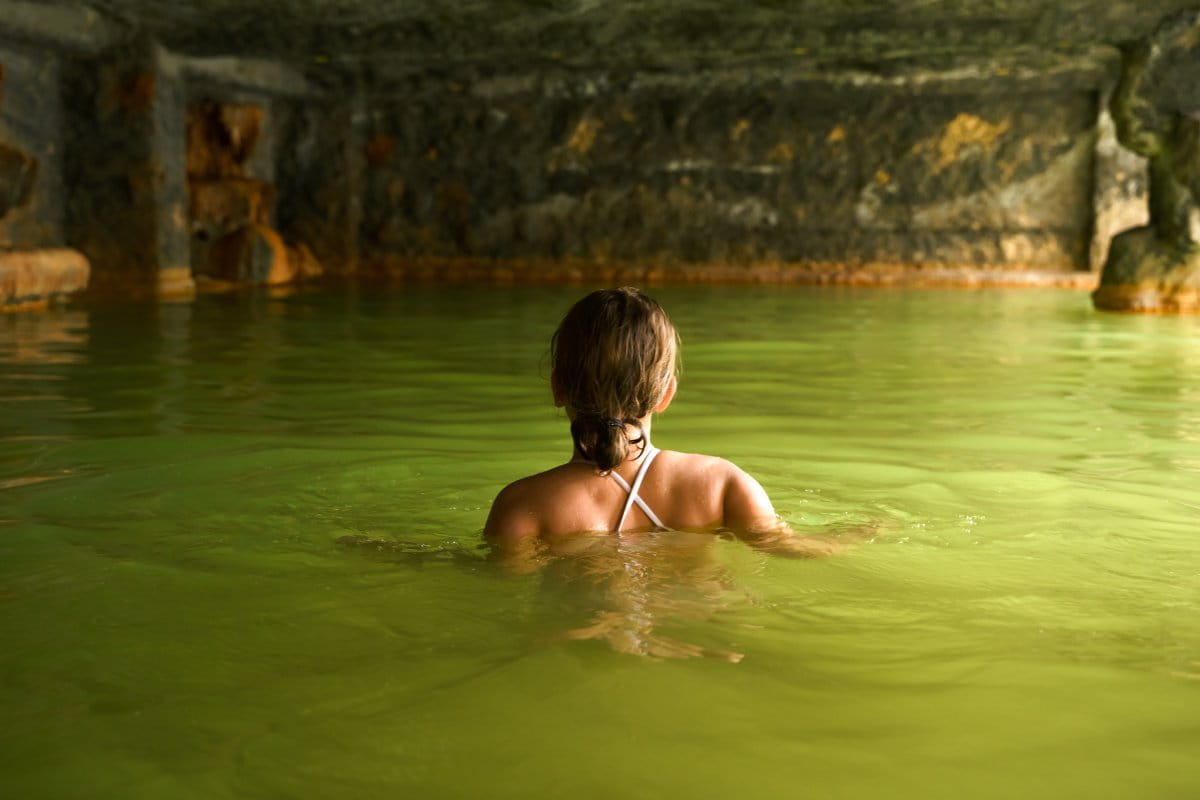
- The Soak: You begin by immersing yourself in the hot sulfur pool to open your pores and relax your muscles. The heat can be intense, so it is wise to take breaks.
- The Scrub (Kisa): The Mekise instructs you to lie on a stone slab. Using a coarse glove made of wool or fabric, they scrub your entire body with surprising strength. You will see rolls of dead skin peeling away, leaving you feeling lighter.
- The Wash: After the scrub, a pillow-case-like linen bag is dipped in soapy water and squeezed over you, covering you in a mountain of foam. The massage that follows is slippery and deep.
- The Rinse: Finally, buckets of warm water are splashed over you to rinse away the suds, leaving your skin incredibly soft and glowing.
Health Benefits and Modern Wellness
Beyond the cultural experience, the waters of Abanotubani are renowned for their therapeutic properties. The water is naturally carbonated and rich in sulfur, hydrogen sulfide, and other minerals. Locals have long prescribed a visit to the baths for a variety of ailments, and modern wellness trends have only reinforced their popularity.
Dermatologically, the sulfur is believed to help with skin conditions such as eczema, acne, and psoriasis due to its antibacterial and anti-inflammatory properties. For those suffering from arthritis, rheumatism, or joint pain, the heat and mineral content can provide significant relief by improving circulation and reducing inflammation. Furthermore, the sheer relaxation of the hot water combined with the cool-down periods promotes a deep sense of mental well-being, combating stress and insomnia.
Planning Your Visit: Practical Tips
Visiting the baths can be intimidating for a first-timer, given the language barrier and the unfamiliar etiquette. You generally have two choices: public baths or private rooms. Public baths are gender-segregated and offer a communal, authentic experience where you bathe alongside locals. Private rooms, which can be rented by the hour, offer privacy and are ideal for couples or groups of friends.
To ensure you have the best possible experience, here is a breakdown of what to expect and how to prepare:
| Category | What You Need to Know |
| Booking | For private rooms, reservations are highly recommended, especially on weekends or evenings. Public baths usually accept walk-ins. |
| What to Bring | Pack waterproof flip-flops, a towel, shampoo, and soap. While these can be rented or bought on-site, bringing your own is more comfortable. |
| Hydration | The sulfur water and heat can be dehydrating. Many private rooms offer tea service—ordering a pot of herbal tea is a traditional way to cool down. |
| Jewelry | Remove all silver jewelry before entering the water. The sulfur will cause silver to tarnish and turn black almost instantly. |
| Timing | A standard session is usually one hour. If you plan to get a scrub and massage, booking 1.5 to 2 hours ensures you don't feel rushed. |
A Timeless Tradition
Emerging from the subterranean chambers of Abanotubani, you are met with the cool, fresh air of the Mtkvari gorge. The city sounds seem sharper, the colors of the Old Town brighter. There is a profound sense of renewal that comes from participating in a ritual that has remained largely unchanged for centuries. Whether you are walking in the footsteps of Pushkin or simply seeking a moment of peace in a busy travel schedule, the sulfur baths of Tbilisi offer a unique connection to the earth and history.
As the sun sets over the brick domes and the lights of the Narikala Fortress flicker on, the steam continues to rise, a silent testament to the warm heart of Tbilisi. It is a reminder that in this ever-changing world, some traditions are worth preserving, one soak at a time.