Stepping into Tbilisi feels like entering a city where history and modernity are engaged in a constant, vibrant dialogue. One moment you are wandering through winding, cobblestone streets lined with ancient balconies, and the next, you are swept up in the fast-paced rhythm of a developing European metropolis. For any traveler landing in Georgia's capital in 2026, understanding how to navigate this terrain is the first step to unlocking the city's true charm. While the layout can seem chaotic at first glance—spread across hills and divided by the Mtkvari River—the public transportation system is surprisingly efficient, affordable, and covers nearly every corner you would want to explore.
Whether you are planning to hike up to the Narikala Fortress, explore the brutalist architecture of the suburbs, or simply hop between wine bars in Sololaki, you have plenty of options. The city has undergone significant transit upgrades in recent years, phasing out older vehicles for eco-friendly buses and streamlining payment systems. This guide will walk you through exactly how to move around Tbilisi with confidence, ensuring you spend less time worrying about logistics and more time enjoying the khinkali.
The Golden Key: Understanding the Metromoney Card and Payments
Before you jump on a bus or descend into the metro, you need to sort out how you will pay. Tbilisi has moved almost entirely away from cash for public transit, embracing a unified digital system that makes life much easier for tourists.
The Metromoney Card
The heartbeat of Tbilisi's transport network is the Metromoney card. This is a universal travel card used for the metro, buses, and the Rike-Narikala cable car. You can purchase one at any metro station ticket office or at the Rike Park cable car station. There is a small, one-time deposit for the card itself, which is refundable if you return the card with your receipt before leaving the country (though many travelers keep it as a souvenir).
Using the card is simple: you tap it on the turnstile or the card reader on the bus. The system allows for a 90-minute transfer window. This means if you tap into the metro, ride for 20 minutes, and then hop on a bus, the second tap within that window is free of charge.
Contactless Bank Cards
If you don't want to carry another piece of plastic, you are in luck. The Tbilisi Transport Company has integrated bank card payments across the network. You can use your foreign Visa or Mastercard (or Apple Pay/Google Pay) directly at metro turnstiles and on bus readers. However, keep in mind that while convenient, using a bank card might sometimes charge a slightly higher rate per ride compared to the Metromoney card, and the 90-minute free transfer window may not always apply depending on your specific bank's processing.
How to Top Up
You will see orange PayBox machines scattered on nearly every street corner in Tbilisi. These kiosks are lifesavers. You can change the language to English, select "Transport," and top up your Metromoney card using cash. It is an intuitive process that takes less than a minute.
Diving Deep: The Tbilisi Metro System
The Tbilisi Metro is an experience in itself. Opened in 1966, it retains a distinct Soviet aesthetic with deep stations, marble pillars, and escalators that seem to go on forever. It is the fastest way to cross the city, avoiding the notorious surface traffic.
Navigating the Lines
The system is straightforward, consisting of just two lines that intersect at Station Square (Sadguris Moedani):
- The First Line (Red Line): This is the main artery running north to south (Akhmeteli to Varketili). It connects major tourist hubs like Rustaveli Avenue, Liberty Square (Tavisuplebis Moedani), and the Old Town (Avlabari).
- The Saburtalo Line (Green Line): This line serves the residential and business district of Saburtalo. It is useful if you are staying in that area or visiting the Technical University.
Trains run frequently, usually every few minutes during the day. The stations are announced in both Georgian and English, making it easy to know when to get off. Just be prepared for the noise; the trains are fast and can be quite loud.
Metro Etiquette
When riding the escalators, always stand to the right to let people pass on the left. This is a strict unwritten rule in Tbilisi. Also, while the stations are safe, they can get very crowded during rush hour (typically 6:00 PM to 8:00 PM), so keep an eye on your belongings just as you would in any major city.
Above Ground: Buses and Marshrutkas
While the metro is fast, it doesn't go everywhere. For the winding streets of Vake, Vera, and the upper parts of the Old Town, you will need the bus network.
The Modern Bus Fleet
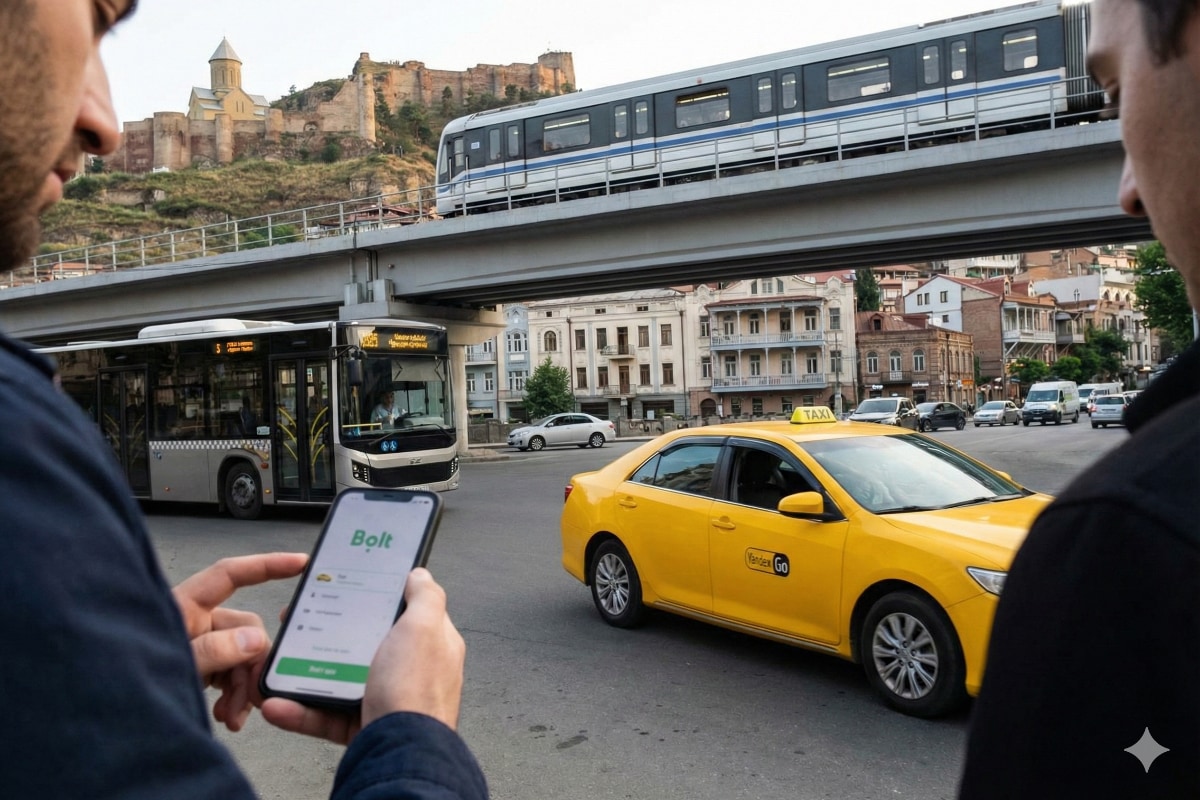
Tbilisi has significantly modernized its fleet. You will mostly see large blue and green MAN buses. These are air-conditioned, comfortable, and equipped with digital route displays. Stops are usually marked with electronic boards showing arrival times.
To plan your route, Google Maps is highly reliable in Tbilisi. It shows accurate bus numbers and arrival times. Alternatively, the official Tbilisi Transport Company (TTC) app is a great resource for real-time tracking.
The Marshrutka (Minibus)
The iconic yellow marshrutkas of the past have largely been replaced by newer blue minibuses. These serve routes that are too narrow or hilly for the large buses. They operate on the same payment system (Metromoney or bank card)—cash is no longer accepted.
Unlike the big buses which only stop at designated stations, marshrutkas have a bit more flexibility, though they are increasingly adhering to official stops. If you are on a quiet street and see your number coming, a gentle wave is usually enough to signal interest, but don't be surprised if the driver points to a bus stop 50 meters away.
Ride-Hailing: The Best Taxi Apps in Tbilisi
Taxis in Tbilisi are incredibly affordable compared to European or North American standards. However, hailing a random taxi off the street is generally not recommended for tourists. Street taxis rarely use meters, and you will likely be quoted a price three times higher than the standard rate. Always use an app.
Top Apps to Download
- Bolt: widely considered the most reliable and user-friendly option for tourists. The cars are generally in better condition, and the drivers are more likely to follow the GPS accurately. You can choose different categories, from economy to premium or pet-friendly.
- Yandex Go: Another major player with vast coverage. It is often slightly cheaper than Bolt, but the quality of cars can vary more. It is a good backup if you cannot find a ride elsewhere.
- Maxim: This is often the budget option. It is useful for longer trips to the outskirts, but be prepared for older vehicles.
Pro Tip: Traffic in Tbilisi can be heavy, especially during evening rush hour. If you are going a short distance in the city center, walking or taking the metro is often faster than sitting in a taxi.
Scenic Transit: Cable Cars and Funiculars
In Tbilisi, public transport is also a sightseeing activity. Because of the city's topography, vertical transport is essential.
Rike-Narikala Cable Car
This is the most famous aerial tramway, connecting Rike Park (near the Peace Bridge) to the Narikala Fortress. The ride offers spectacular 360-degree views of the Old Town. You can pay with your Metromoney card. It is magical at sunset.
Turtle Lake Aerial Tramway
Located in Vake Park, this cable car takes you up to Turtle Lake (Kus Tba), a popular recreational area. It’s a bit more rustic than the Rike cable car but offers a lovely ride over the Vake district.
The Mtatsminda Funicular
To reach the Mtatsminda Park amusement park and the giant Ferris wheel overlooking the city, you take the Funicular. Note: The Metromoney card does not work here. You must purchase a specific Funicular card at the ticket office at the base station. The ride is steep and offers perhaps the best panoramic view of Tbilisi.
Transport Mode Comparison
To help you decide which mode fits your current need, here is a quick comparison:
| Mode | Best For | Speed | Coverage |
| Metro | Long distances, avoiding traffic | Fast | Limited (Main hubs only) |
| Bus | General city travel, Vake & Saburtalo | Moderate | Excellent |
| Taxi Apps | Nightlife, comfort, luggage | Variable (Traffic dependent) | Door-to-Door |
| Cable Car | Sightseeing, reaching high points | Slow & Scenic | Specific Tourist Spots |
Getting to and from the Airport
Your transport experience starts the moment you land. Shota Rustaveli Tbilisi International Airport is located about 17km from the city center.
- Bus #337: This blue bus runs from the airport arrivals terminal directly to Freedom Square and Station Square. It is the most budget-friendly option. It runs frequently during the day and has a reduced schedule at night. You can pay with a bank card tap.
- Taxi Apps: Do not accept the offers from the aggressive taxi drivers standing in the arrivals hall. Connect to the airport Wi-Fi, open Bolt or Yandex, and order a car to the "Departures" curb (usually easier for pickups) or the designated parking zone. It is safe, tracked, and fair-priced.
Navigating to Popular Tourist Spots
Here's a quick guide on how to reach some of Tbilisi's most beloved attractions using public transport:
- Narikala Fortress: Take the metro to Avlabari station and walk towards Rike Park to catch the Rike-Narikala Cable Car. Alternatively, bus #90 will take you closer to the fortress entrance from Freedom Square.
- Old Town (Abanotubani): The closest metro station is Avlabari. Several buses also stop nearby, including #31, #44, and #50.
- Rustaveli Avenue: The Red Line of the metro runs directly under Rustaveli Avenue, with stations at Rustaveli and Freedom Square. Numerous buses also traverse this central thoroughfare.
- Dry Bridge Market: Take the metro to Station Square and walk for about 15 minutes. Buses #20, #23, and #106 also stop nearby.
- Chronicle of Georgia: Take the metro to Ghrmaghele station and then take a taxi or bus to reach the monument.
A Glimpse into Local Commuting Habits
Observing how locals get around can offer valuable insights. Many Tbilisites rely heavily on the metro for their daily commute, especially during peak hours. Buses are also a popular choice, particularly for reaching neighborhoods not directly served by the metro. While taxi apps are widely used, especially for late-night travel or when carrying groceries, walking remains a common mode of transport, especially in the central districts. You'll often see locals strategically combining different modes of transport to optimize their journey, such as taking the metro to a central point and then hopping on a bus or marshrutka to reach their final destination. During warmer months, many locals also enjoy using scooters and bicycles, although the city is still developing its cycling infrastructure.
Getting around Tbilisi is part of the adventure. Whether you are squeezing into a rush-hour metro car or gliding over the Mtkvari River in a cable car, the journey connects you to the local rhythm of this fascinating city. Download the apps, get your card, and start exploring.